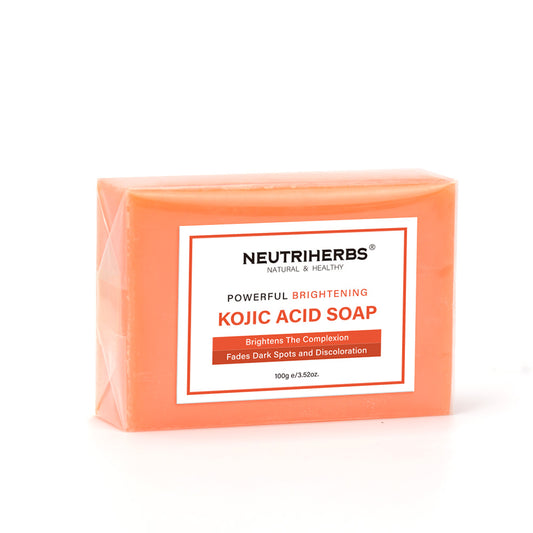

Kojic acid has quickly become a holy grail ingredient for anyone battling stubborn dark spots, acne scars, or an uneven skin tone. Derived safely from fungi, this potent tyrosinase inhibitor works wonders by gently minimizing excess melanin production without harming the skin's natural structure (Ayuhastuti et al., 2024).
However, because richer, darker skin tones possess highly reactive melanocytes, using kojic acid incorrectly can backfire. Instead of revealing a radiant glow, bad habits can lead to irritation, redness, or, worse, hyperpigmentation (Davis, 2010). If you want to celebrate your natural complexion and keep your skin clear, balanced, and healthy, make sure you avoid these five common mistakes.
#1 Using It to Bleach Your Skin
One of the biggest misconceptions about brightening ingredients is that they should be used to change your natural skin tone. This is a massive mistake. Clean beauty is about celebrating your natural radiance, building confidence, and fading uneven discoloration—not whitening your skin.
When applied to dark skin, high concentrations of kojic acid used as an all-over "bleaching agent" can severely strip the skin barrier, leading to intense inflammation and damage (Owolabi et al., 2020). Authentic skincare science focuses on harmony, targeting dark spots while keeping your overall melanin profile healthy and intact. Always treat your unique shade with the respect it deserves!

#2 Skipping Your Daily Sunscreen
Kojic acid works by suppressing tyrosinase, the very enzyme that prompts your skin to produce melanin when exposed to UV light (Ayuhastuti et al., 2024). Melanin is your skin’s natural defense mechanism. By lowering that defense to clear up dark marks, your skin becomes much more vulnerable to the sun's harsh rays.
If you use a brightening routine without applying broad-spectrum sun protection daily, you are essentially erasing all your progress. Unprotected sun exposure will trigger the melanocytes to overproduce pigment, resulting in darker, more stubborn post-inflammatory hyperpigmentation (PIH) (Davis, 2010).

#3 Mixing Kojic Acid with Too Many Harsh Actives
It is incredibly tempting to throw every powerful product at a dark mark in hopes it will disappear overnight. Pairing kojic acid simultaneously with strong physical scrubs, high-percentage AHAs, and prescription retinoids is a recipe for a compromised skin barrier.
Rich, melanin-dense skin types respond differently to aggressive physical or chemical stressors. When you over-exfoliate or stack too many irritating ingredients, you trigger deep cutaneous inflammation (Davis, 2010). For rich skin tones, inflammation often resolves, leaving behind brand-new dark marks that defeat the entire purpose of your brightening routine. Keep your routine simple, gentle, and deeply focused on barrier support.

#4 Applying It on Broken or Inflamed Skin
Never apply active treatments like kojic acid to an open blemish, fresh wound, or actively inflamed patch of eczema. When the stratum corneum (the outermost layer of your skin barrier) is broken, the absorption of water-soluble actives increases dramatically (Goodman, 2024).
While deeper penetration may seem like a shortcut to faster fading, it actually causes severe localized irritation, chemical burns, and transient erythema (Moolla & Miller-Monthrope, 2022). If you have an active breakout or an open sore, pause the actives. Let your skin heal completely using soothing, barrier-loving ingredients before introducing targeted treatments back into your routine.
#5 Expecting Instant Overnight Results
True skin health takes patience. Discoloration forms deep within the skin's cellular layers, and it takes time for hyperpigmented cells to naturally cycle out and shed. Expecting dark marks to completely vanish within a few days only leads to product hopping, over-application, and unnecessary skin damage.
A safe, dermatologist-tested brightening routine requires consistent daily application alongside healthy skin habits. Most clinical studies demonstrate that visible improvements in epidermal hypermelanosis occur steadily after a minimum of 4 to 8 weeks of consistent use (Davis, 2010; Moolla & Miller-Monthrope, 2022). Consistency and gentleness will always win the race.
References
-
Ayuhastuti, A., Syah, I., Megantara, S., & Chaerunisaa, A. (2024). Nanotechnology-Enhanced Cosmetic Application of Kojic Acid Dipalmitate, a Kojic Acid Derivate with Improved Properties. Cosmetics, 11(1), 21. https://doi.org/10.3390/cosmetics11010021
-
Davis, E. C. (2010). Postinflammatory Hyperpigmentation: A Review of the Epidemiology, Clinical Features, and Treatment Options in Skin of Color. The Journal of Clinical and Aesthetic Dermatology, 3(7), 20–31. https://pmc.ncbi.nlm.nih.gov/articles/PMC2921758/
-
Goodman, G. (2024). Recommendations on Periprocedural Skincare for Energy-Based Dermatologic Procedures. Journal of Clinical and Aesthetic Dermatology, 17(2), 12–19. https://pmc.ncbi.nlm.nih.gov/articles/PMC12198435/
-
Moolla, S., & Miller-Monthrope, Y. (2022). Dermatology: how to manage facial hyperpigmentation in skin of colour. Drugs in Context, 11, 1–14. https://doi.org/10.7573/dic.2021-11-2
-
Owolabi, J. O., Fabiyi, O. S., Adelakin, L. A., & Ekwerike, M. C. (2020). Effects of Skin Lightening Cream Agents – Hydroquinone and Kojic Acid, on the Skin of Adult Female Experimental Rats. Clinical, Cosmetic and Investigational Dermatology, 13, 283–289. https://doi.org/10.2147/ccid.s233185